

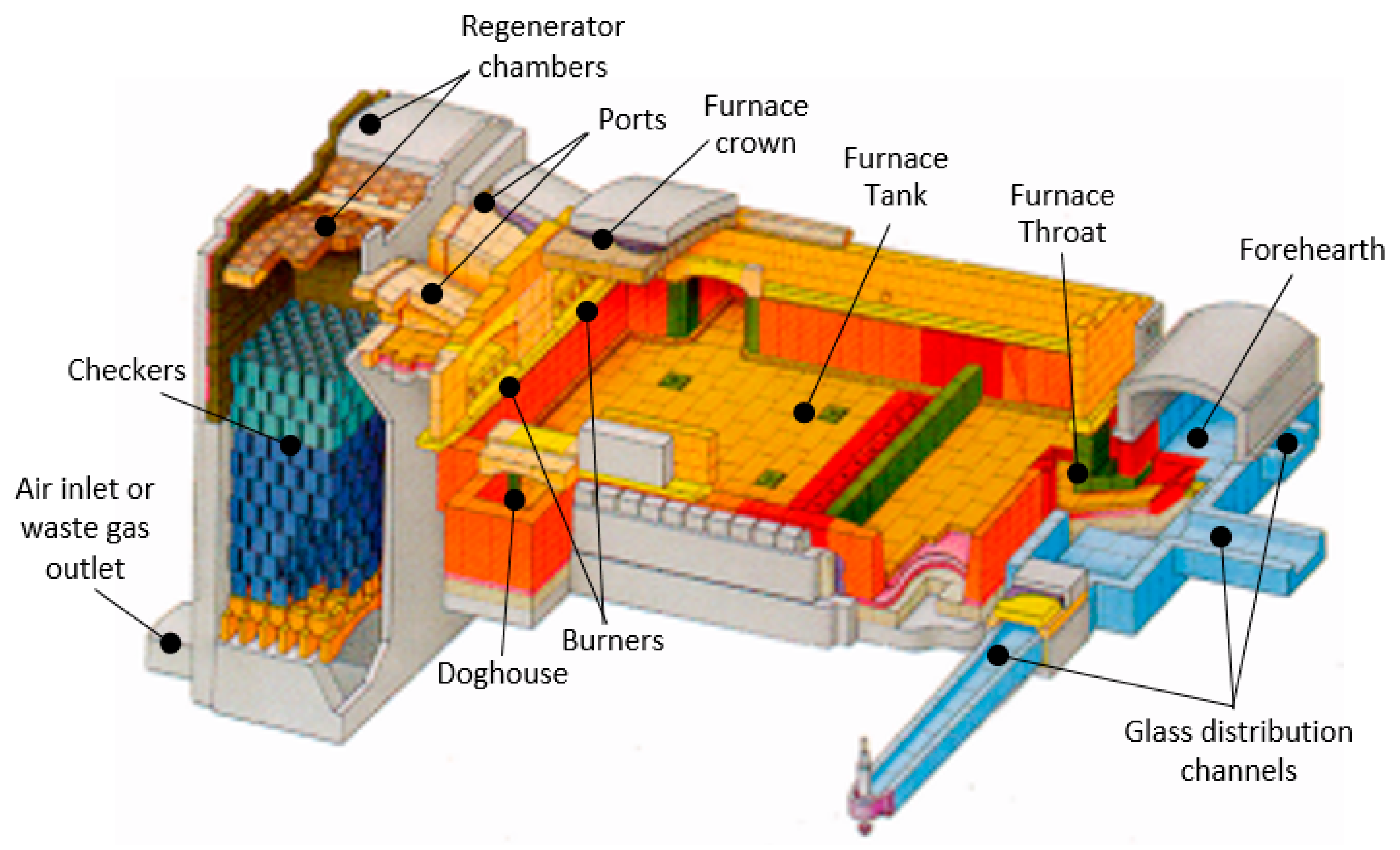
A glass furnace is a thermal equipment constructed from refractories for glass melting. Its primary function is to produce glass of the required quality and quantity under the most economical conditions possible.
At present, the tank furnace is the most widely adopted furnace type in the glass industry, which falls into flame-fired tank furnaces and electric-heated tank furnaces. To fulfill the purpose of a glass melting furnace, the refractories used must first offer excellent resistance to corrosion by molten glass and gaseous agents, alongside a high refractoriness under load and good thermal stability.
The degradation of glass furnaces is dominated by chemical corrosion, coupled with the impact of thermal stress. Since the mechanical, physical and chemical operating conditions vary across different zones of the melting furnace, the refractories selected for each section must match the local service conditions to guarantee a sufficient service life of the furnace. Meanwhile, the refractories shall not exert adverse effects on adjacent refractory bricks of other grades.
The properties of refractories deployed in glass furnaces exert a profound influence on furnace operation and final glass quality. Improper selection and application of refractories will not only lead to frequent shutdowns for maintenance, limit melting temperatures and reduce furnace output, but also shorten the life of the melting tank and induce numerous glass defects such as cords and stones. Therefore, the proper selection and use of refractories for glass furnaces are critically important.
Post time: Oct-29-2026